




27-Jan-2026
In today’s digital-first world, a business website is no longer just an online brochure—it is a living platform that evolves with your brand, customers, and market demands. From publishing content and managing products to updating services and engaging users, businesses need flexibility and control. This is where a Content Management System (CMS) becomes essential.
A Creative Content Management System empowers businesses to manage their website content efficiently without relying on technical expertise. Whether you are a startup, small business, or enterprise, a CMS simplifies content updates, supports mobile-first websites, and ensures your digital presence remains fresh, relevant, and competitive.
Key Features Supported by a CMS:
- Website Page Creation and Editing: Quickly build and modify pages using a drag-and-drop interface or pre-defined templates. This flexibility allows businesses to launch new services, product pages, or promotions without waiting for developer support.
- Blog and Article Publishing: CMS platforms enable content marketing by simplifying the publication of blogs, news, and articles. Scheduling, categorization, and tagging features help organize content for easy access and discoverability.
- Image, Video, and Media Management: Media libraries allow businesses to upload, organize, and optimize images, videos, and other assets. Many CMS platforms automatically optimize media for faster loading and better performance across devices.
- User Roles and Permissions: Assign roles to team members such as editors, authors, and administrators. This ensures workflow efficiency and security by controlling who can make changes and who can only view content.
- SEO and Performance Optimization: Built-in SEO tools enable businesses to manage meta titles, descriptions, URLs, and structured data. Performance features such as caching, minification, and image optimization help ensure fast load times and smooth user experiences.
- Scalability and Customization: Through professional CMS development services, platforms can be customized to include additional features like e-commerce modules, customer portals, CRM integration, and analytics dashboards—making the CMS a central hub for business operations.
Why a CMS Is Essential for Businesses?
A CMS acts as the backbone of your digital strategy. Centralizing content management, it allows teams to focus on creating value for users rather than wrestling with technical issues. It ensures consistency across pages, simplifies updates, and reduces reliance on specialized developers. For businesses aiming to build mobile-first websites, a CMS ensures that content is automatically responsive, providing a seamless experience across all devices.
Ultimately, a modern CMS is not just a content tool—it’s a strategic investment that empowers businesses to grow, adapt, and compete in an increasingly digital world. Platforms like the Creative Content Management System combine usability, performance, and flexibility to help businesses manage their online presence efficiently while supporting long-term growth.
How a Creative Content Management System Works?
A Creative Content Management System (CMS) is more than just a tool for editing content—it is a comprehensive platform that separates content, design, and functionality. This separation allows businesses to manage their website efficiently while ensuring a consistent user experience, strong performance, and robust security. By streamlining the technical aspects, a Creative CMS lets teams focus on what matters most: creating engaging, high-quality content that drives business growth.
The system is designed to support businesses of all sizes, from startups to large enterprises, and is particularly valuable for organizations that need frequent updates, multiple contributors, and scalable solutions.
Key Components of a Creative CMS:
- Content Editor for Text, Images, and Media: The content editor is the heart of the CMS. It allows users to create, format, and update website content with ease. From blog posts to product descriptions and multimedia content, the editor ensures everything is published accurately and efficiently without requiring coding skills.
- Templates and Themes for Consistent Design: A Creative CMS provides a variety of templates and themes to maintain consistent branding across all pages. These pre-designed layouts ensure that the website remains visually appealing, cohesive, and professional, regardless of who updates the content.
- Database Management for Secure Content Storage: All content is stored in a structured, secure database. This ensures that text, images, videos, and other digital assets are safely stored and easily retrievable. Advanced CMS platforms include backup and recovery options to protect critical business data.
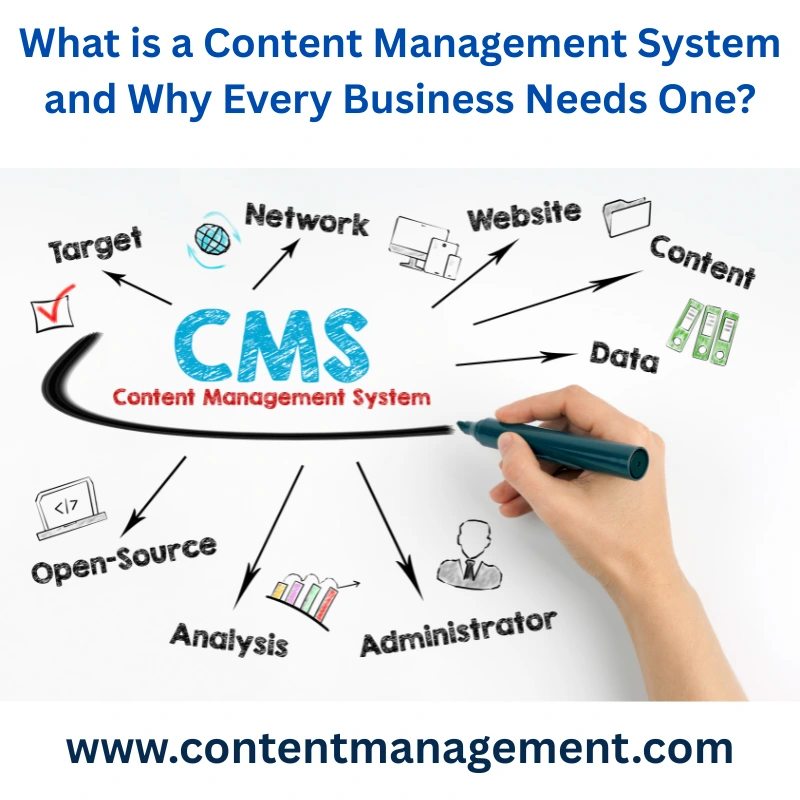
- Admin Dashboard for Control and Monitoring: The admin dashboard gives website owners full control over content, user roles, permissions, and overall site performance. Businesses can track updates, monitor user activity, and make strategic adjustments from a centralized interface.
Why This Structure Matters?
Separating content from design and functionality provides several key advantages:
- Improved Efficiency: Teams can focus on creating content without worrying about technical implementation.
- Consistent Branding: Templates ensure that all pages reflect the company’s visual identity and messaging.
- Enhanced Security: With controlled access and secure databases, sensitive information is protected.
- Scalability: Businesses can easily add new pages, features, or modules as they grow without disrupting existing functionality.
- Better Performance: Optimized backend processes ensure faster load times, smoother navigation, and improved overall user experience.
A Creative Content Management System is not just a website tool—it’s a strategic asset that supports mobile-first websites, content flexibility, and long-term growth. It empowers businesses to maintain a dynamic, engaging, and aligned digital presence that aligns with their evolving business goals.
Why Every Business Needs a CMS Today?
Managing a website manually is time-consuming, expensive, and inefficient. A CMS solves these challenges by giving businesses control over their digital assets.
Key Reasons Every Business Needs a CMS
- Easy Content Updates: Businesses can update text, images, blogs, and announcements in minutes without developer support.
- Cost and Time Efficiency: Reduces ongoing development costs by allowing in-house teams to manage content.
- Faster Go-to-Market: New pages, offers, or campaigns can be launched instantly.
- Consistency Across Pages: Design templates ensure uniform branding throughout the website.
- Improved Collaboration: Multiple users can manage content with defined roles and permissions.
With professional CMS development services, these benefits are tailored to match business goals and workflows.
CMS and Mobile-First Websites
Mobile usage now dominates online traffic. A CMS plays a critical role in supporting mobile-first websites, ensuring content adapts seamlessly across devices.
A CMS helps by:
- Automatically adjusting layouts for mobile screens
- Optimizing images and media for faster mobile loading
- Ensuring touch-friendly navigation
- Supporting responsive design frameworks
Mobile-first websites powered by a well-built CMS deliver better user experiences and higher engagement across smartphones and tablets.
SEO Benefits of Using a CMS
Search engine visibility is essential for online success. A CMS helps businesses follow SEO best practices without technical complexity.
SEO advantages include:
- Easy meta title and description management
- Clean and search-friendly URLs
- Fast page loading and performance optimization
- Structured content for better indexing
- Integration with SEO tools and analytics
A Creative Content Management System ensures your website remains search-engine friendly while allowing continuous content growth.
Scalability and Flexibility for Growing Businesses
As businesses expand, their digital requirements evolve. A CMS provides the flexibility to add new features, pages, and integrations without rebuilding the website.
Scalable CMS features include:
- Adding new service pages or products
- Integrating eCommerce and payment systems
- Expanding to multilingual content
- Connecting third-party tools and APIs
With expert CMS development services, businesses can future-proof their website infrastructure.
Security and Control with CMS Platforms
Security is a major concern for any online business. Modern CMS platforms include built-in security features that protect content and user data.
Security benefits include:
- User role-based access control
- Regular system updates and patches
- Secure data storage and backups
- Protection against unauthorized changes
A professionally developed CMS ensures your website remains stable, secure, and compliant with industry standards.
Custom CMS vs Off-the-Shelf CMS
While ready-made CMS platforms are popular, many businesses benefit from customized solutions tailored to their operations.
Custom CMS Advantages:
- Built specifically for business workflows
- Better performance optimization
- Enhanced security controls
- Seamless integration with existing systems
A Creative Content Management System developed through specialized CMS development services delivers long-term value beyond generic platforms.
Why Choose a Creative Content Management System?
In the modern digital landscape, managing a website goes far beyond publishing text and images. A Creative Content Management System (CMS) is designed not just to organize content but to become a strategic tool that drives business growth, enhances brand visibility, and supports your overall digital strategy. Choosing the right CMS empowers businesses to take control of their online presence, streamline workflows, and stay ahead of competitors.
Key Advantages of a Creative Content Management System:
- User-Friendly Content Management: Creative CMS platforms feature intuitive dashboards and visual editors that allow teams to create, edit, and update content with ease. Employees can manage blogs, pages, images, and videos without relying on developers, saving both time and resources.
- Support for Mobile-First Websites: With mobile traffic surpassing desktop usage, responsive design is critical. A Creative CMS ensures that your website adapts seamlessly to smartphones, tablets, and desktops, delivering consistent, smooth user experiences across all devices.
- SEO-Ready Structure: A well-built CMS includes built-in SEO tools to optimize content for search engines. From meta tags and clean URLs to structured data and fast loading speeds, it ensures that your website ranks higher and reaches more potential customers.
- Scalability and Customization: Businesses grow, and so do their website requirements. Creative CMS platforms are flexible and scalable, allowing you to add new features, pages, or integrations as your business evolves. Whether it’s e-commerce modules, customer portals, or analytics dashboards, the system grows with your needs.
- Long-Term Cost Efficiency: By reducing dependency on technical staff for routine updates, a Creative CMS lowers ongoing operational costs. It streamlines website management and minimizes the risk of errors, making it a cost-effective solution in the long run.
- Complete Control Without Technical Dependency: Perhaps the most significant advantage is autonomy. A Creative Content Management System allows businesses to maintain control over their website, respond quickly to market changes, and implement content strategies independently—without waiting for IT or development teams.
Why it Matters for Your Business?
Implementing a Creative Content Management System is not just about convenience—it’s about creating a future-ready website that supports your brand, engages your audience, and drives measurable business results. With mobile-first optimization, SEO readiness, and scalable architecture, the CMS becomes a foundation for both short-term efficiency and long-term digital growth.
Whether you’re running a blog, corporate website, or e-commerce platform, a Creative CMS ensures your online presence is dynamic, adaptable, and strategically aligned with your business objectives. It is a smart investment that pays off in improved productivity, better user engagement, and a stronger competitive edge.
Conclusion
A Content Management System (CMS) is no longer optional—it is a necessity for modern businesses. From managing daily content updates to supporting mobile-first websites and SEO growth, a CMS provides the foundation for a strong digital presence.
With the right CMS development services, businesses can implement a Creative Content Management System that is flexible, secure, and scalable. Investing in a CMS empowers businesses to stay competitive, responsive, and future-ready in an ever-changing digital landscape.
Categories
Recent Posts
Website Speed Optimization Checklist – A Guide by Creative Web Solutions
In today’s fast-paced digital world, website speed is no longer optional—it’s essential. Users expect websites to load in seconds, and...
Why Website Speed Optimization is the Secret to Better User Experience?
In today’s digital world, users expect fast, seamless, and responsive websites. If a webpage takes too long to load, visitors...
Cheap Web Design Solutions vs. Custom-Coded Premium Creative Websites — What’s Right for Your Business?
In today’s digital-first world, your website is more than just an online presence — it’s the face of your brand,...
Why Your WordPress Site Needs Regular Maintenance?
In today’s digital world, your website is often the first impression customers have of your brand. For businesses using WordPress,...